Travis Wright
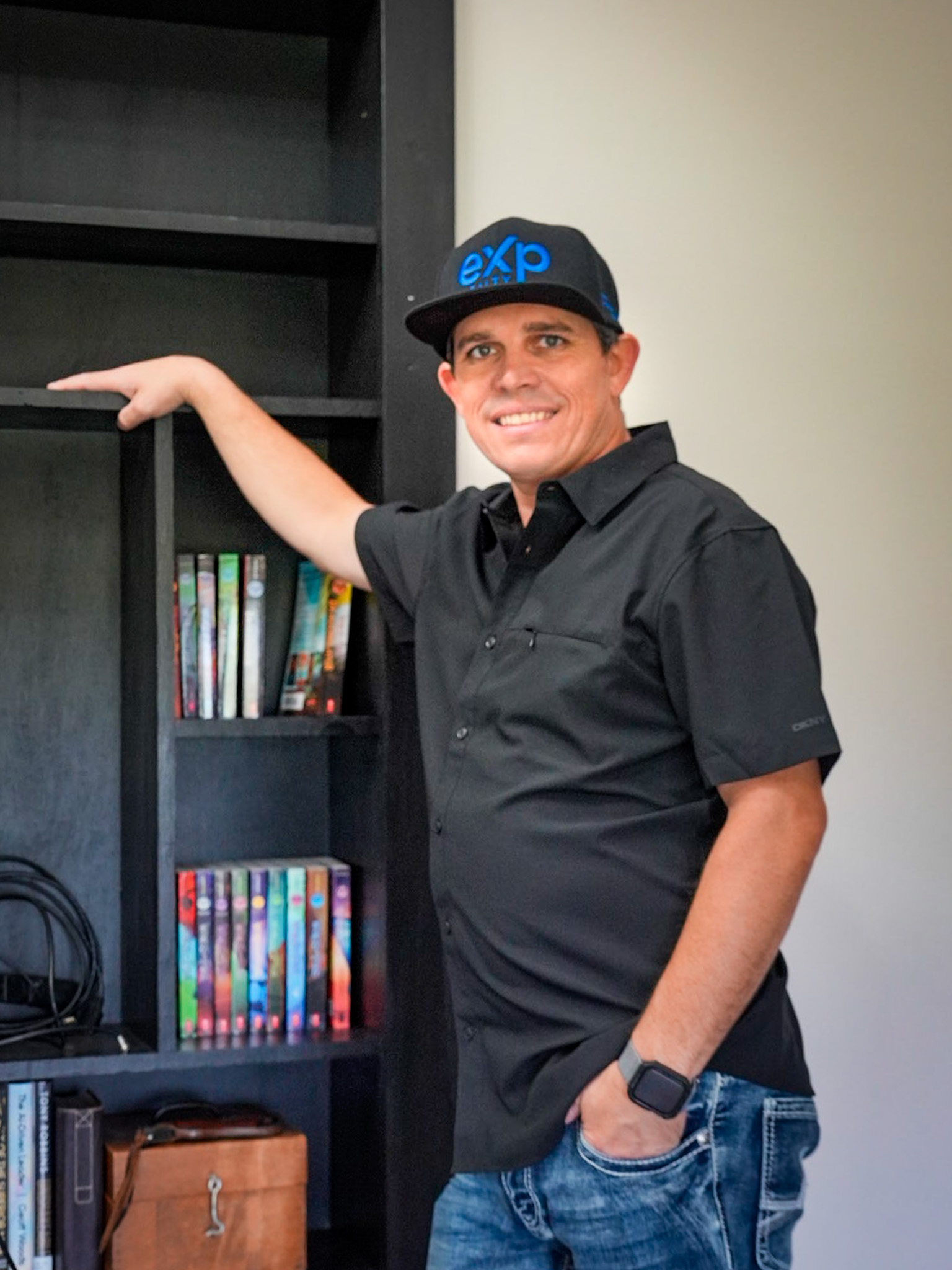
Travis Wright is an eXp Realty ICON Agent and one of eXp Realty's Top 250 Individual Agents in the United States, RealTrends Verified, specializing in move-in-ready new construction in Elgin, military PCS relocation to Fort Sill, and helping Southwest Oklahoma homeowners sell their homes.
More about TravisA USDA Rural Development loan is a government-backed mortgage that pays for up to 100% of a home in a qualifying rural area, which means no down payment for buyers who meet the household income limits. It is an especially strong fit for buyers looking at the smaller communities around Fort Sill: Cache, Fletcher, Sterling, Medicine Park, and much of Elgin, all of which generally fall inside USDA-eligible rural boundaries. Lawton's denser neighborhoods usually do not qualify. USDA works only for a primary residence, the property must meet USDA requirements, and in 2026 the program carries a 1% upfront guarantee fee plus a 0.35% annual fee. If you can buy with nothing down in an area you want, and your household income is within the limits, USDA is often the most affordable path into a Southwest Oklahoma home. Confirm the exact address on the USDA eligibility map and the current income limit for your household size with a USDA-approved lender before you commit.
You have narrowed your Fort Sill search to one of the smaller communities that makes up much of the charm of Southwest Oklahoma, a place like Cache, Fletcher, Sterling, or Medicine Park, and you want to figure out whether you can buy with little or no money saved for a down payment. For many buyers, the USDA Rural Development loan is exactly what they are looking for.
Travis Wright is a REALTOR with eXp Realty serving Lawton, Fort Sill, Elgin, Cache, Medicine Park, Fletcher, Sterling, and the surrounding Southwest Oklahoma area. He has helped buyers weigh USDA financing alongside VA, FHA, and conventional options throughout the region. This guide explains how USDA loans work, which local communities qualify, what they really cost, and how to tell whether one is right for you.
This article is for informational purposes only and does not constitute professional, legal, or financial advice. For specific loan questions and current program details, consult with a licensed USDA-approved mortgage lender or your financial advisor.
How a USDA Rural Development loan works
The USDA Rural Development guaranteed loan, officially the Single Family Housing Section 502 loan, is a government-backed mortgage administered by the United States Department of Agriculture. Its most famous feature is 100% financing: you can borrow the full purchase price with no down payment, and the seller or builder can even help with closing costs within program limits.
In exchange for that benefit, USDA loans come with a set of guardrails. The home must be your primary residence, so you cannot use USDA for a second home, an investment property, or a vacation rental. The property must be located in a USDA-designated eligible rural area. And your household income, counting all adults who will live in the home, must fall at or below the program's income limit for the area. Those three requirements, place, purpose, and income, are the heart of what separates USDA from a conventional or VA loan.
There are two versions of the program. The guaranteed loan is the one most buyers use: it is offered through approved private lenders, and the USDA backs a portion of it, which is what lets lenders offer 100% financing. There is also a direct loan, which the USDA itself funds and which is income-restricted to lower-income households with a subsidized rate. For most homeowners in the Fort Sill area, the guaranteed loan through a lender is the practical path, and that is the version this guide focuses on.
Which communities near Fort Sill are USDA eligible?
USDA property eligibility is geography-based, not a blanket county rule. The program treats towns differently depending on population. Areas under roughly 10,000 residents automatically qualify as rural. Slightly larger towns must meet additional conditions, and larger metro hubs do not qualify at all.
That framework points clearly at how Southwest Oklahoma breaks down. Cache, with a population in the low thousands, Fletcher, Sterling, and Medicine Park all fall well under the automatic rural threshold, so homes in these towns generally qualify for USDA financing. Elgin, another smaller community just minutes from Fort Sill and the Wichita Mountains, is also typically eligible. Meanwhile Lawton, the county seat and the population center of the region, usually does not qualify because its larger population pushes much of it outside the rural boundary.
The practical takeaway is that USDA tends to line up with the communities many Fort Sill families already love, the quieter towns with room to spread out, lower price points, and often real rural character. If you are set on a home inside Lawton's city limits, USDA may not apply to you. If you are open to Cache, Fletcher, Sterling, Medicine Park, Elgin, or the unincorporated areas around them, USDA is probably in play. Because the boundary is address-specific, always confirm the exact parcel on the USDA property eligibility map before you build a strategy around it. Your agent and lender can check a specific address together.
How USDA income limits work
USDA income limits are set per county and scaled by household size, and they count the combined gross income of every adult who will live in the home, not just the person on the mortgage. That household can include a co-borrower, a spouse, or adult children, so the number adds up quickly for a multi-income household.
As a general reference for 2026, the base income guideline for most areas is around $122,800 for a one-to-four person household and $162,100 for a five-to-eight person household, though the exact limit that applies to you depends on Comanche County's specific figures and your household size. None of these numbers are fixed in stone, and they are adjusted over time, so the crucial step is to confirm the current limit for your household size and county with a USDA-approved lender rather than assuming a number applies to you.
Because the limit counts everyone in the household, a two-income military family with a working spouse can push above the threshold even when a single buyer would qualify. If you are near the line, a local lender who runs USDA loans regularly can help you see where you land and, in some cases, whether household composition changes your eligibility. This is one of the reasons it pays to talk through the numbers with a lender before you fall in love with a specific property.
The real cost of a USDA loan: guarantee fees and beyond
USDA loans have no traditional mortgage insurance, but they do carry a guarantee fee that works in a similar way. For loans obligated after October 1, 2025, the upfront guarantee fee is 1% of the loan amount, and the annual fee is 0.35% of the average outstanding balance. The upfront fee can typically be financed into the loan rather than paid at closing, and the annual fee is folded into your monthly payment. Both figures change from time to time, so your lender's current numbers are the ones that matter.
Compared with FHA, which requires both an upfront premium and an annual mortgage insurance premium that usually stays for the life of the loan, USDA's annual fee structure can be lighter over time. For buyers who plan to hold a home in a rural community for many years, that difference can amount to real monthly savings after a decade or so of payments.
Beyond the guarantee fees, the usual home buying costs still apply: title work, an appraisal, loan origination charges, and the prepaid items like your first year of homeowners insurance and prorated property taxes that go into your escrow. The Oklahoma homestead exemption can soften your ongoing property tax bill, and it is worth reviewing alongside any USDA purchase. The key point is that the no-down-payment benefit is real, but it does not mean zero closing costs, so keep a realistic budget for what you will bring to closing. The closing costs guide walks through the typical line items for a Southwest Oklahoma purchase.
Can you use a USDA loan for new construction?
Yes, USDA financing can support new construction through a one-time-close construction-to-permanent loan. In this structure, the USDA loan pays for the construction phase and then converts to your permanent 30-year mortgage when the home is complete. Because it is a single loan, you go through closing once and you lock your financing terms from the start.
There are strings attached. USDA requires an approved builder, a USDA appraisal during construction to verify the home will meet program minimum property requirements, and a final property that must qualify as a primary residence in an eligible rural area. New construction is common in several of the USDA-eligible communities around Fort Sill, including Cache and Elgin, where builders are active. If you are weighing a new build in one of these areas, ask both your lender and the builder whether they are set up to handle USDA construction financing, and compare it against the financing a builder's preferred lender might offer. Different builders and lenders handle USDA builds with varying levels of experience, so experience matters.
For buyers choosing between an existing home and a new build, the same USDA property eligibility, income limit, and 100% financing rules apply either way. The new construction financing guide lays out how USDA compares with the construction-to-permanent and builder-financing routes.
USDA vs. VA, FHA, and conventional no-down-payment options
USDA is not the only zero-down or low-down option, and the right choice depends on where you want to live and which loan you can actually use. Comparing them side by side makes the decision much clearer.
USDA vs. VA. Both offer 100% financing, but they apply to very different buyers. VA is available only to eligible service members, veterans, and their qualifying spouses, and it has no location or household income test. USDA is open to any qualifying primary-residence buyer in an eligible rural area, regardless of military status, but it has the income limit and the geography requirement. VA also tends to carry lower long-term costs because, after the upfront funding fee, there is no required annual mortgage insurance premium, so many military families still come out ahead with VA even when they could qualify for USDA. If you want to preserve your VA entitlement for later, USDA can give you a zero-down path now while keeping that entitlement intact.
USDA vs. FHA. FHA requires a minimum down payment of 3.5% and has an upfront and annual mortgage insurance premium that typically stays for the life of the loan. USDA costs less to enter, at zero down, and its annual fee is often lower over time. But FHA applies to properties anywhere and has no income limit, making it the fallback when a property is outside an eligible rural area.
USDA vs. conventional. Conventional loans are available almost anywhere and are not income-restricted, but they require a down payment unless you use a 3% or zero-down program through a specific lender or state program, and they often demand a higher credit score. For a buyer with a limited down payment who has their eye on a rural community, USDA frequently wins on entry cost. The full comparison article goes through each loan type in more depth.
How the USDA process works for a Southwest Oklahoma buyer
The USDA process looks a lot like any other mortgage, with a few extra steps tied to the program's geography and income rules.
Confirm area and income first. Before you spend time on showings, verify that the property is in an eligible area and that your household income fits. Your lender can run the eligibility check and confirm the current income limit, and together you can check the USDA eligibility map for the specific address. Doing this early prevents a disappointing surprise after you have already chosen a home.
Get pre-approved with a USDA-approved lender. Many lenders are USDA-approved, but not all are experienced with the program. Choose one who runs USDA loans regularly. For the pre-approval you will provide pay stubs, bank statements, tax returns, and identification just as you would for any loan. If you are active-duty military, your Leave and Earnings Statement and PCS orders help establish your income picture.
Find a home and make an offer. With a USDA pre-approval in hand, you can shop and offer with confidence in the eligible communities. Your offer becomes stronger when the seller sees that your financing is already lined up, especially in a competitive small-town market.
Underwriting, appraisal, and closing. Once you are under contract, the lender underwrites the loan and orders a USDA appraisal, which verifies that the property meets USDA's minimum property requirements, including safety, soundness, and condition standards. Rural properties often come with wells, septic systems, and other systems that the appraiser and the lender will scrutinize, which is where the rural-property guidance comes in. After the appraisal and final underwriting clear, you close, the loan funds, and the deed is recorded in Comanche County or the relevant county. The whole process typically runs on the same 30 to 45 day timeline as a conventional purchase, so it fits a normal PCS schedule when you start early.
Your next steps for a USDA loan near Fort Sill
If USDA sounds like it could fit your situation, the single most useful next step is to talk with a USDA-approved lender about your specific household, the communities you like, and the current income and fee figures. Bring your income picture and your shortlist of towns, and let them verify both your eligibility and a couple of sample properties' area eligibility.
At the same time, keep your options open. Run the USDA numbers alongside a VA or FHA quote on the same home so you can see which gives you the best monthly payment and total cost. A no-down-payment loan that qualifies you for a home in Cache, Fletcher, Sterling, Medicine Park, or Elgin can be the difference between renting and owning once you arrive at Fort Sill, and it is worth getting the comparison done before you commit.
Travis helps buyers weight USDA, VA, FHA, and conventional options across Lawton, Fort Sill, Elgin, Cache, Medicine Park, Fletcher, Sterling, and the rest of Southwest Oklahoma, including connecting them with lenders who know the USDA program well. If you are planning a move to the area and want to talk through which financing path fits the community you have in mind, reach out anytime.
Need move-specific guidance?
Talk through your Fort Sill move with someone who knows the local tradeoffs.
Travis helps military families, out-of-state buyers, and relocation sellers sort through timelines, area choices, and next steps with clear local context.
Related reading
Keep building your relocation plan
VA vs. FHA vs. USDA vs. Conventional Loans Near Fort Sill
Compare VA, FHA, USDA, and conventional loan options for buying a home near Fort Sill. Learn which mortgage fits your situation.
Buying Acreage or Rural Property Near Fort Sill
A guide for buyers looking at acreage and rural property near Fort Sill, including well, septic, and land considerations.
VA Loan Well, Septic, and Private Road Rules Near Fort Sill
What military buyers with VA loans need to know about wells, septic systems, and private roads on rural Southwest Oklahoma properties.
How to Finance a New Construction Home Near Fort Sill
Compare construction-to-permanent loans, VA new construction financing, builder incentives, and what military buyers need to know.
Is Cache, OK a Good Fit for Fort Sill Military Families?
What Cache, Oklahoma offers Fort Sill military families, and the tradeoffs of building or buying in this growing southwest community.