
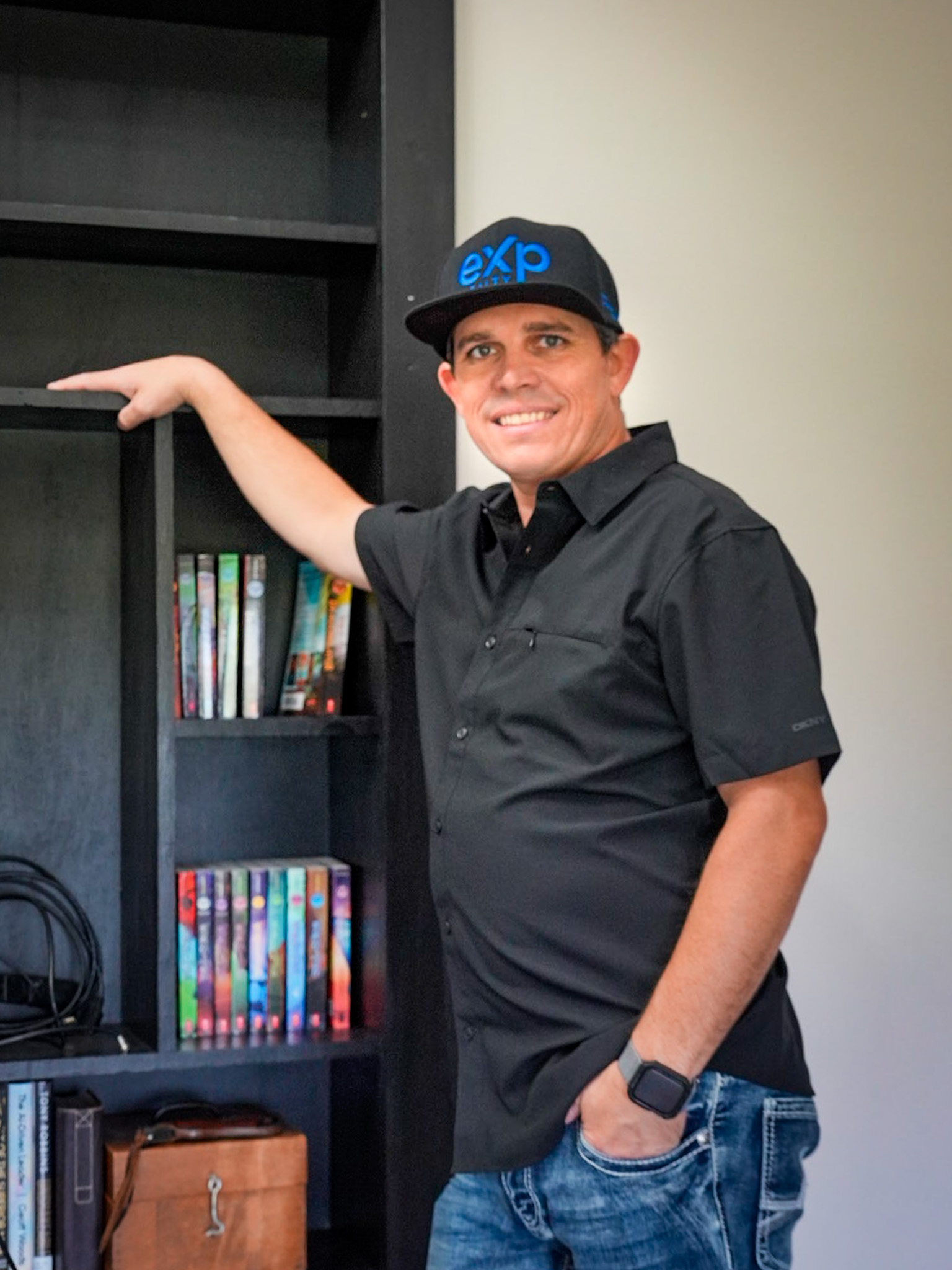
Travis Wright
Travis Wright is an eXp Realty ICON Agent and one of eXp Realty's Top 250 Individual Agents in the United States, RealTrends Verified, specializing in move-in-ready new construction in Elgin, military PCS relocation to Fort Sill, and helping Southwest Oklahoma homeowners sell their homes.
More about TravisIf you are buying a home near Fort Sill with a VA loan, purchasing a property with a private well, an aerobic septic system, or on a private gravel road is fully permitted, but it triggers non-negotiable VA Minimum Property Requirements (MPRs). For private water wells, the VA requires a comprehensive water quality test (screening for bacteria, lead, nitrates, and nitrites) and strict spacing clearances from potential contamination sources, such as being at least 50 feet from a septic tank and 100 feet from a septic absorption or spray field. For private roads—often found in rural areas of Elgin, Cache, and Medicine Park—the VA demands a legally recorded, joint maintenance agreement signed by all neighbors sharing the road to ensure emergency vehicle access in all weather conditions. While these rules can seem daunting, especially for military families coordinating a PCS move from out of state, they are designed as critical safeguards to protect your housing budget and personal safety.
A Change of Station (PCS) order to Fort Sill often pushes relocating military families to search for more breathing room, larger lot sizes, and scenic views of the Wichita Mountains. Surrounding communities like Elgin, Cache, and Medicine Park offer gorgeous country acreage, but they also bring you face-to-face with rural infrastructure: private water wells, septic systems, and private gravel or dirt roads.
In Southwest Oklahoma, Travis Wright serves as your dedicated eyes, ears, and local advisor, helping you evaluate home value, inspect local neighborhood fits, navigate standard contracts, and manage showing communication. However, Travis is not a mortgage lender, licensed septic installer, hydrologist, surveyor, tax attorney, or structural engineer. For mortgage qualification, water systems engineering, or legal easement advice, always consult the appropriate qualified professional alongside your relocation plan.
VA Private Well Water Testing & Local Red Flags in Comanche County
Private water wells are extremely common in the rural stretches of Comanche County. Drive ten minutes west of Elgin on US-277, or head north of Cache toward the open rangeland along Quanah Parker Lake Road, and you will find dozens of properties drawing water from the ground rather than from a municipal line. The VA does not penalize you for buying one of these homes, but it does require that the well produce potable water meeting the standards established in VA Pamphlet 26-7, Chapter 12.
The Exact Tests the VA Requires
The VA's Minimum Property Requirements mandate a water quality test any time a home is served by a private well. In Comanche County, the test panel must cover at minimum:
- Total coliform bacteria — the broadest indicator of microbial contamination from surface runoff, livestock, or failing septic systems nearby.
- E. coli (fecal coliform) — the most direct indicator of sewage or animal waste intrusion into the aquifer.
- Lead — particularly relevant in older well casings or homes built before 1986 when lead solder and galvanized pipes were common.
- Nitrates (NO₃) — present naturally in Southwest Oklahoma soils but elevated dramatically by agricultural fertilizer runoff and livestock operations, which are widespread across the Cache and Elgin farming corridors.
- Nitrites (NO₂) — a byproduct of nitrogen cycling that signals active regulatory concerns.
Some VA lenders operating in the Fort Sill market will require an expanded panel that also covers arsenic, because naturally occurring arsenic has been detected at trace levels in portions of the aquifer systems that underlie Southwest Oklahoma. Ask your lender directly which panel they require before you pay for testing. Costs typically range from $150 to $350 depending on the laboratory and the number of contaminants screened.
Who Collects the Sample—and Why It Matters
The VA is explicit: the water sample cannot be collected by the buyer or the seller. It must be gathered by a disinterested third party—typically a licensed home inspector certified in well sampling, a Comanche County Health Department official, or a state-licensed laboratory technician performing an on-site collection. This is not a bureaucratic technicality. Chain of custody documentation protects the integrity of the result and protects you legally if contamination is later discovered after closing.
The Rush Springs Aquifer and Local Geology Context
Much of the well water in eastern Comanche County and the Elgin area draws from the Rush Springs Aquifer, a sandstone formation that runs beneath a wide swath of Southwest Oklahoma. The aquifer generally produces good-quality water, but it is naturally shallow in certain pockets—sometimes less than 80 feet to the water table—which makes it more vulnerable to surface contamination from cattle operations, agricultural chemical storage tanks, and older, improperly sealed septic systems. Properties near the Wichita Mountains—especially in and around Medicine Park and the Fletcher area—may instead draw from fractured rock formations that produce water with elevated hardness. Neither situation is disqualifying, but both are reasons to take the water test seriously and to factor any treatment system costs into your budget.
What Happens If the Water Fails?
A failed water test does not automatically kill the deal. The VA appraiser will note the deficiency in their report and condition the loan on remediation. Common remediation paths include shocking the well (a chlorination treatment that kills bacterial contamination), installing an approved filtration or UV treatment system, or in some cases connecting to a nearby rural water district line if one is available. The seller is typically responsible for remediation costs under standard contract language, but this is negotiable.
Aerobic Septic Systems: Spacing Rules & What VA Appraisers Are Vetting
If you have shopped rural properties in the Elgin, Cache, or Medicine Park corridors of Southwest Oklahoma, you have almost certainly seen listings that mention an "aerobic septic system." Unlike a conventional anaerobic septic system—which routes waste into a buried tank and then a passive drain field—an aerobic treatment unit (ATU) injects air into the treatment chamber, accelerating bacterial decomposition and producing a clear effluent that is then surface-sprayed across a designated spray field, usually visible as a series of pop-up sprinkler heads in the backyard. Oklahoma is one of the heaviest users of aerobic septic systems in the country, largely because the heavy red clay soils in Comanche County absorb water slowly and are poorly suited for conventional drain fields.
The Core Spacing Requirements
For a VA loan to be approved on a property with both a private well and an on-site septic system, the following minimum separation distances must be documented and verified by the appraiser:
- Well to septic tank: Minimum 50 feet of clearance between the well casing and the septic tank lid.
- Well to septic spray field or absorption field: Minimum 100 feet between the well casing and the nearest spray head or the edge of any drain field trench.
- Well to property line: Minimum 10 feet.
- Septic tank to property line: Minimum 5 feet.
These are VA minimums. The Oklahoma Department of Environmental Quality (ODEQ) may impose stricter setbacks. If the ODEQ permit on file for the property shows a shorter distance than the VA minimum, the VA's standard governs—meaning the property cannot be approved without remediation or a documented variance.
How the VA Appraiser Vets an Aerobic System
A VA appraiser conducting a property appraisal near Fort Sill will conduct a visual inspection of the aerobic unit's exterior components—looking for an intact lid, functioning control panel, visible spray heads that appear operational, and no pooling of effluent or sewage odor. They are not conducting a mechanical inspection of the ATU's internal components. That is why—on any property with an aerobic septic system—you should always hire an independent licensed Oklahoma septic system inspector to inspect the unit. A standard aerobic unit serving a three-bedroom home in Elgin or Cache has blowers, clarification chambers, chlorine tablet dispensers, and spray pump motors. Any one of these components failing can cost $500 to $3,000 or more to repair. Full ATU replacement on a rural Comanche County property typically runs $8,000 to $14,000 depending on system size and site conditions.
The Annual Maintenance Contract Requirement
Oklahoma state law requires all aerobic septic systems to be covered by an active, licensed maintenance contract. The licensed service provider must inspect the system on a regular schedule, record readings, replenish chlorine tablets, and file reports with the county health department. When you buy a home with an aerobic system using a VA loan, you should verify if an active contract is on file. Budget approximately $150 to $250 per year for this ongoing maintenance.
The Private Road Dilemma: Will the VA Approve a Dirt Lane in Elgin or Cache?
One of the most common surprises for military buyers purchasing rural properties near Fort Sill is the private road requirement. Many lands in Southwest Oklahoma sit at the end of shared gravel, dirt, or caliche lanes off Highway 115, Highway 19, or Highway 62. While these lanes are perfectly functional, the lack of recorded maintenance documentation can trigger a loan condition.
What the VA Specifically Requires
Per VA Pamphlet 26-7, Chapter 12, Section 12.08, a property accessed by a private road must meet all three of the following conditions:
- The road must be legally passable year-round. This means the road surface—whether gravel, caliche, compacted dirt, or paved—must allow ordinary passenger and emergency vehicles to travel the road in all four Oklahoma seasons. A deeply rutted clay road that turns to impassable mud after local spring storms will not satisfy this condition.
- There must be a recorded, permanent easement or right-of-way providing access from a public road to the property. The easement must be recorded in the Comanche County Clerk's office and must run with the land—meaning it transfers automatically to subsequent owners. A handshake agreement with a neighboring landowner is entirely unacceptable.
- There must be a recorded private road maintenance agreement (PRMA) binding all parties who share use of the road. This is the condition that kills more rural VA deals near Fort Sill than any other single issue.
What a Private Road Maintenance Agreement Must Contain
A PRMA is a legal instrument—signed by all property owners who share the road, notarized, and filed with the county clerk—that addresses each of the following elements:
- Legal description of the road: Precisely identifying the shared segment.
- Signatures of all parties: Every property owner sharing access must be a signatory.
- Maintenance responsibilities: Stating who handles the work and how costs are split.
- Cost allocation for major repairs: Clearly defining how extra repairs (like washed-out culverts or grading) are handled.
- Perpetual duration: The agreement must run with the land and bind all future owners.
Dirt and Gravel Roads near local Highways
If you are shopping rural acreage south and east of Lawton, Elgin, or Cache, you will run into ranch roads with no recorded PRMAs. What happens in practice is that the VA appraiser flags the shared private road as a deficiency, demanding a recorded PMRA. If any of the neighbors refuse to sign, your VA loan cannot close. This is why vetting road details with your agent on day one of house-hunting is crucial.
Seeking a VA Waiver for Private Road Conditions
In limited circumstances, the VA Regional Loan Center (RLC) can grant a waiver of the PRMA requirement if the veteran-borrower acknowledges in writing that they accept the roads maintenance responsibility themselves. This waiver pathway is most viable when a veteran is purchasing a truly isolated rural property with its own dedicated single driveway connecting to a public road, where no other neighbors share access.
Traditional HOA Home vs. Country Acreage: VA Loan Tradeoffs
Choosing between a standard subdivision in northwest Lawton and a rural acreage in Elgin, Cache, or Medicine Park involves clear tradeoffs related to VA guidelines, maintenance carrying costs, and lifestyles.
| Factor | Traditional Subdivision Home (City utilities, HOA) | Rural Acreage Property (Well, septic, private road) |
|---|---|---|
| VA Appraisal Complexity | Straightforward. Comps available within same development. Turns around in 7–10 business days. | More complex. Comps may require pulling from large radii. Can take 10–18 business days. |
| Water Supply Inspections | None required. Municipal supply presumed safe and compliant automatically. | Private well requires water test for bacteria, coliform, nitrates, and lead. Retesting adds time if failed. |
| Septic System Requirements | None. Public sewer presumed safe. No special septic evaluation needed. | Requires evidence system is functioning. Septic inspection by licensed expert recommended ($300–$600). |
| Road Access Requirements | Paved public road. Complies with VA Minimum Property Standards automatically. | Requires recorded easement and recorded PRMA (or VA waiver) for shared lanes. Unpaved access must be year-round passable. |
| Ongoing Maintenance Costs | Predictable. Homeowner responsible for building structure and minor lawn care. | Higher carrying risk. Responsible for well pump ($800–$2500) and septic maintenance ($150–$250/year). |
| PCS Resale Considerations | Broader buyer pool. Fast turnaround resales common during transfer seasons. | Slightly narrower buyer pool. However, local military demand for land near Fort Sill is very steady. |
Rural VA Loan Myths vs. Oklahoma Realities
Bad information spreads quickly in PCS packing circles and unit Facebook groups. Let's tackle three major myths and look at the real local Oklahoma realities.
Myth #1: "VA loans can't be used on properties with a septic system."
Reality: This is flatly false. VA loans are used on septic-served properties every single day in Comanche, Caddo, and Kiowa counties. The VA's requirement is not that the property have public sewer—the requirement is that the sewage disposal system is safe, sanitary, and functioning properly. A permitted, aerobic septic system with operational lawn spray heads meets this standard. The only time a septic system stalls a VA loan is when the appraiser notes visible issues like standing effluent sewage or odors. A healthy septic system is completely unremarkable to a VA underwriter.
Myth #2: "Private Roads Are Automatic Disqualifiers for VA Loans"
Reality: The VA does not care whether your road is dirt, gravel, or paved. The VA cares about whether you have legally protected vehicular access in perpetuity. This means you need a recorded, permanent easement showing the path runs with the land, combined with a Joint Road Maintenance Agreement signed by all neighboring property owners utilizing that road. Absent that documentation, the loan won't close—but the unpaved road itself is not a barrier.
Myth #3: "VA Loans Require Prohibitively Expensive Water Tests"
Reality: Water quality testing on a private well is required, but it is not expensive or difficult. In Oklahoma, standard well water tests (screening for E. coli, total coliform bacteria, lead, nitrates, and nitrites) costs between $150 and $300 from local state-certified laboratories. Results take 5 to 10 days, easily fitting within a 45-day closing window. A failed test usually indicates bacterial infiltration or nitrates from nearby fertilizer fields, which is often cured by a simple well shock chlorination ($200–$400) or a reverse osmosis treatment system at the kitchen sink.
How to Safely Shop for Rural Properties Near Fort Sill
If you are relocating to Southwest Oklahoma or preparing for a PCS, walking rural lands can be challenging from afar. Here is how you can set yourself up for rural homebuying success:
- Get pre-approved with a VA-experienced lender: Ensure they understand Oklahoma rural property guidelines and can navigate well/septic scenarios with ease.
- Order the water test immediately after contract agreement: Do not wait for the appraiser. Turnaround can take several days and you want to catch any bacterial or chemical red flags early in your inspection window.
- Hire a licensed Oklahoma septic professional: Do not rely solely on a standard home inspection. Aerobic septics have complicated electrical blowers, pumps, and chlorine dispensers. Verify their mechanical health independently.
- Document the shared road easements early: Request deed abstracts and recorded easements from the title company in Lawton on day one. Ensure your real estate agent initiates contact with neighbors if a PMRA must be drafted.
- Budget for minor acreage appraiser variances: Since comps with land can be scarce, value variance is more typical. Work with an agent who understands how to pull regional comps and write strong, defensible Tidewater rebuttals if necessary.
Ready to find your country homestead near Fort Sill without the stress of managing rural VA rules from afar? Direct-message Travis Wright or call today to schedule a custom acreage and home search analysis, and let’s build a move-in plan that protects your family, your PCS timeline, and your peace of mind. Contact Travis Wright today for a personalized, low-pressure relocation consultation.
Need move-specific guidance?
Talk through your Fort Sill move with someone who knows the local tradeoffs.
Travis helps military families, out-of-state buyers, and relocation sellers sort through timelines, area choices, and next steps with clear local context.
Related reading
Keep building your relocation plan
VA Appraisal Process Near Fort Sill
Learn how VA appraisals evaluate fair market value and verify Minimum Property Requirements (MPRs) in Southwest Oklahoma.
Common VA Loan Mistakes near Fort Sill
Avoid the typical missteps military home buyers make with VA loans, including closing costs and property eligibility.
Out-of-State Home Buying Guide
How to manage remote showings, virtual tours, and remote home purchases near Fort Sill.