
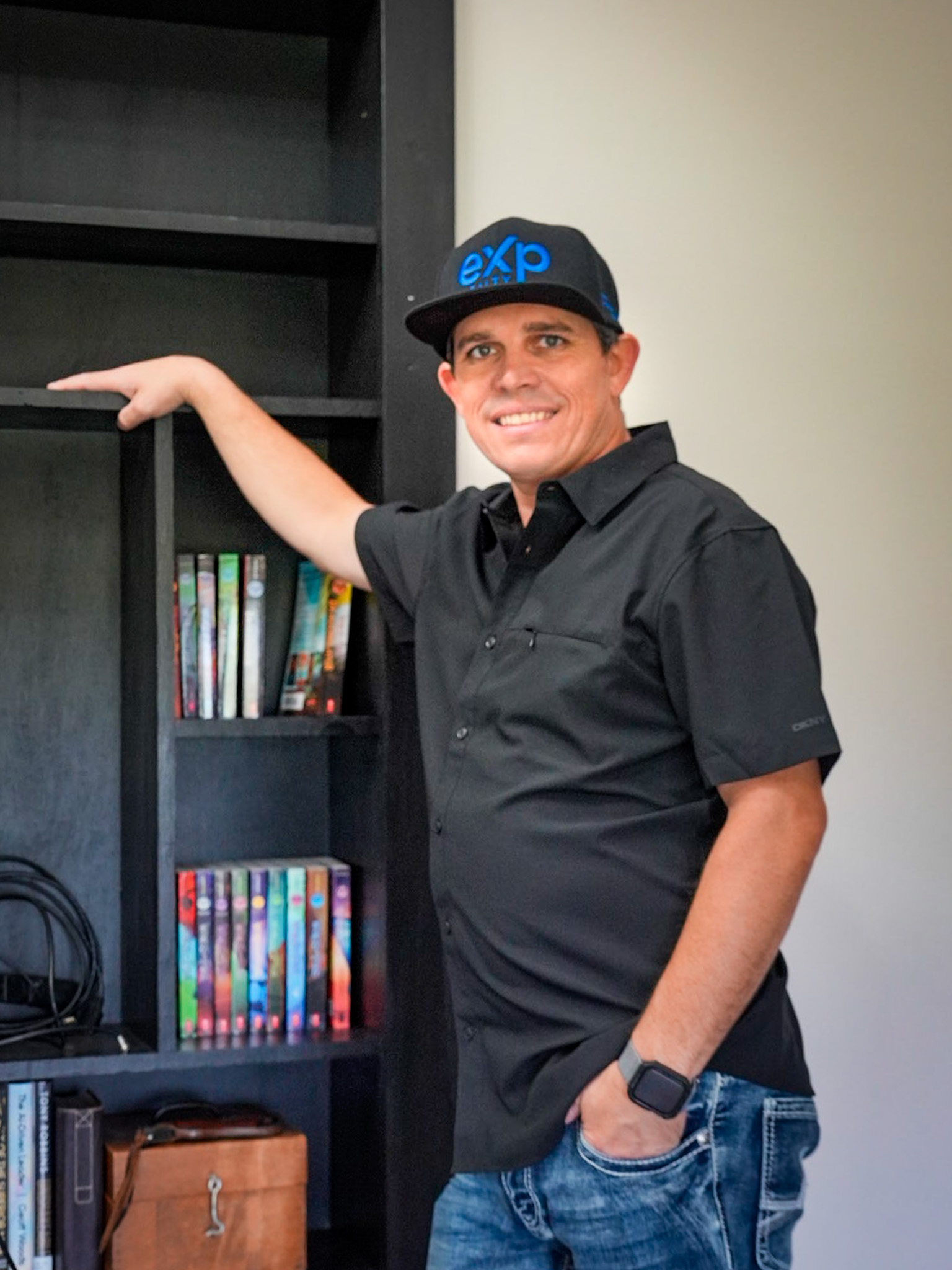
Travis Wright
Travis Wright is an eXp Realty ICON Agent and one of eXp Realty's Top 250 Individual Agents in the United States, RealTrends Verified, specializing in move-in-ready new construction in Elgin, military PCS relocation to Fort Sill, and helping Southwest Oklahoma homeowners sell their homes.
More about TravisClosing costs near Fort Sill typically run between 2% and 5% of the purchase price for military buyers using a VA loan. On a $250,000 home, expect $4,000 to $7,000 in buyer-side costs including the VA funding fee, lender origination, title insurance, appraisal, and Comanche County recording fees. The good news: VA guidelines allow sellers to contribute up to 4% toward your closing costs, and the VA funding fee can be rolled into your loan instead of paid at the closing table. Understanding what you actually owe before closing day is the difference between a smooth move and a budget surprise you did not plan for.
Every military family I work with knows the purchase price. Most can tell me their expected BAH down to the dollar. But when I ask about closing costs, I usually get a blank look or a guess. Closing costs are the part of buying a home near Fort Sill that catches people off guard, especially when you are coordinating a PCS move from out of state and trying to figure out how much cash you actually need to bring.
This guide breaks down exactly what military buyers should expect to pay at closing near Fort Sill, how VA loans change the math compared to conventional financing, who typically pays what in Oklahoma, and what mistakes cost military families real money. I want you to walk into closing day knowing your numbers, not discovering them at the table.
Note: I am a real estate agent, not a lender or financial advisor. The figures below reflect typical costs in the Fort Sill area based on publicly available data and local transaction experience. For specific numbers on your loan, work with your VA-approved lender.
What closing costs should military buyers expect near Fort Sill?
Closing costs are the fees and charges you pay to finalize a home purchase beyond the down payment and purchase price. Near Fort Sill — whether you are buying in Lawton, Elgin, Cache, or Medicine Park — the following costs are standard:
- VA funding fee: This is the largest single closing cost for VA buyers. For first-time use with zero down, the fee is 2.15% of the loan amount. For subsequent use or with a down payment, it ranges from 1.25% to 3.3%. Veterans receiving VA compensation for a service-connected disability are exempt from this fee entirely.
- Lender origination fee: VA guidelines cap this at 1% of the loan amount. On a $250,000 loan, that is $2,500.
- Appraisal fee: VA appraisals in the Fort Sill area typically cost $500 to $650. This is paid upfront or at closing.
- Title insurance: A lender's title policy is required. An owner's policy is optional but strongly recommended. In Comanche County, expect $500 to $900 for an owner's policy on a $250,000 home.
- Title search and settlement fees: Usually $300 to $500 combined, paid to the title company handling your closing.
- Recording fees: Comanche County charges for recording your deed and mortgage. Typically $50 to $100.
- Credit report fee: $30 to $50, pulled by your lender during pre-approval.
- Prepaid items: These include your first year's homeowners insurance premium, prepaid interest from closing to the end of the month, and initial escrow deposits for property taxes and insurance. These vary significantly based on your close date and policy cost.
The total range depends on your home price, whether you roll the funding fee into the loan, and how much your seller contributes. But knowing the individual line items means there should be no surprises when the closing disclosure arrives three days before your signing.
How do VA closing costs compare to conventional?
One of the strongest advantages of a VA loan is that it reduces several closing costs that conventional buyers must pay. Here is a side-by-side comparison for a $250,000 home near Fort Sill:
| Cost Item | VA Loan | Conventional (3% Down) |
|---|---|---|
| Down payment | $0 | $7,500 |
| Private mortgage insurance (PMI) | None | $140–$210/month until 20% equity |
| VA funding fee (first use, 0% down) | $5,375 (can be financed) | N/A |
| Lender origination | Up to 1% ($2,500) | 0.5%–1.5% ($1,250–$3,750) |
| Appraisal | $500–$650 | $400–$600 |
| Title insurance (owner's) | $500–$900 | $500–$900 |
| Estimated total buyer costs at closing | $4,000–$7,000 (excl. funded fee) | $11,000–$15,000+ |
The difference is significant. Even with the VA funding fee included, most military buyers bring substantially less cash to closing than a conventional buyer at 3% down. And because there is no monthly PMI, your ongoing payment stays lower too. If you want to understand the full VA loan process, the VA home buying guide walks through it step by step.
Who pays what in an Oklahoma real estate closing?
Oklahoma does not have a fixed law dictating who pays which closing costs. Most are negotiable. But here is how it typically works in the Fort Sill market:
- Buyer pays: Lender origination fee, VA funding fee, appraisal fee, credit report, owner's title insurance (if elected), and prepaid escrow items.
- Seller pays: Real estate commissions for both agents, owner's title policy (in many Oklahoma transactions), transfer taxes (Oklahoma charges a documentary stamp tax on deeds, usually $0.75 per $500 of consideration), and any agreed-upon seller concessions.
- Split or negotiated: Title company settlement fees, survey costs (if required), home warranty (if included in the contract), and prorated property taxes.
Seller concessions on VA loans: The VA allows sellers to pay up to 4% of the loan amount toward the buyer's closing costs, prepaid items, and VA funding fee. In a $250,000 purchase, that means up to $10,000 in potential seller-paid costs. In the Fort Sill market, asking for 2% to 3% in concessions is common and often accepted, especially on homes that have been listed for more than a few weeks.
This is where having an agent who understands negotiation matters. The right strategy depends on the specific home, how long it has been listed, and current market conditions across Lawton, Elgin, Cache, and Medicine Park. The buyer guide covers how to structure offers that protect your budget while remaining competitive.
What do closing costs look like at different home prices near Fort Sill?
Closing costs scale with the purchase price, but not proportionally. Some fees are flat regardless of price, while others like the funding fee and origination are percentage-based. Here is what buyer-side closing costs look like across common Fort Sill area home prices, assuming first-time VA use with zero down and the funding fee rolled into the loan:
| Home Price | Lender Origination (1%) | Title Insurance | Appraisal + Recording + Misc. | Estimated Cash at Closing |
|---|---|---|---|---|
| $200,000 | $2,000 | $600 | $900 | $3,500–$4,800 |
| $250,000 | $2,500 | $750 | $1,000 | $4,200–$5,800 |
| $300,000 | $3,000 | $900 | $1,100 | $5,000–$6,900 |
| $350,000 | $3,500 | $1,050 | $1,200 | $5,800–$7,900 |
Note: These estimates exclude prepaid items (insurance premium, prepaid interest, initial escrow deposits), which vary based on your close date and insurance cost. If the seller provides concessions, your actual cash at closing will be lower. Your lender's closing disclosure will show exact numbers at least three business days before you sign.
The takeaway: for most military families buying in the $200,000 to $350,000 range near Fort Sill, you should budget between $4,000 and $8,000 in available cash for closing, assuming the VA funding fee is financed. If the seller contributes 2% to 3%, that number can drop to $2,000 to $4,000. Plan for the higher number and be pleasantly surprised if concessions reduce it.
What do military buyers often get wrong about closing costs?
After helping many military families through closings near Fort Sill, I see the same misconceptions over and over. Here are the ones that actually cost people money or create unnecessary stress:
Myth 1: "The VA loan means I bring nothing to closing."
Zero down payment does not mean zero closing costs. The VA eliminates the down payment and PMI, but you still owe lender fees, title insurance, appraisal, and prepaid items. The funding fee can be financed, but origination and third-party costs are typically due at closing unless the seller covers them.
Myth 2: "The seller automatically pays my closing costs."
Seller concessions are negotiated, not guaranteed. If your offer does not specifically request seller-paid closing costs (usually as a percentage of the purchase price in the contract), the seller has no obligation to pay them. Your agent should include this in the offer strategy from the start.
Myth 3: "My cash-to-close is just the down payment plus a few hundred dollars."
Even with zero down on a VA loan, prepaid items alone can add $1,500 to $3,000 to your closing day total. This includes your first year of homeowners insurance, prepaid interest from closing date to month-end, and initial escrow reserves. These are real costs that vary by your specific property and closing date.
Myth 4: "I can switch lenders last-minute if I find a better rate."
Switching lenders after you are deep into the process requires restarting appraisals, title work, and underwriting. It delays your closing and can jeopardize your purchase contract. Choose a VA-experienced lender early and stick with them. The common VA loan mistakes guide covers more pitfalls that military buyers face.
Myth 5: "Closing costs are the same everywhere."
They are not. Recording fees, title insurance rates, and transfer taxes vary by county and state. Comanche County costs differ from what you would pay in, say, Texas or North Carolina. If you are relocating from another state, do not use your previous home purchase as a benchmark for what you will pay near Fort Sill.
What should out-of-state buyers watch for at closing?
If you are buying a home near Fort Sill while still stationed elsewhere, closing day comes with extra logistics. Here is what to prepare for:
- Wire transfer timing: Your closing funds must arrive as a wire transfer, not a personal check. Initiate the wire at least one business day before closing. Banks have daily wire cutoff times, and Friday closures often require Thursday transfers.
- Power of attorney: If you cannot attend closing in person, a VA-specific power of attorney allows someone you trust to sign on your behalf. Coordinate this with your lender, title company, and the Fort Sill legal assistance office well in advance.
- Closing disclosure review: Federal law requires your lender to provide a closing disclosure at least three business days before closing. Review every line item. Compare it against your original loan estimate. If anything changed significantly, ask your lender before you arrive at the table.
- Identification requirements: Bring a valid government-issued photo ID (military ID or driver's license). If using a POA, the POA document must be notarized and recorded with the county clerk.
- Insurance confirmation: Your lender needs proof of homeowners insurance before funding. If you are buying remotely, confirm your insurance policy is bound and the first-year premium is paid before closing day.
Out-of-state closings are manageable when planned properly, but they require earlier coordination than a local purchase. The out-of-state buying guide covers the full remote buying process from start to keys.
Questions military families ask most
How much are closing costs on a VA loan near Fort Sill?
On a $250,000 VA loan near Fort Sill, expect buyer closing costs between $4,000 and $7,000. This includes the VA funding fee (2.15% to 3.3% depending on down payment and prior use), lender origination charges, appraisal fee, title insurance, and Comanche County recording fees. The VA funding fee can be rolled into the loan amount rather than paid at closing.
Can the seller pay my closing costs on a VA loan?
Yes. VA guidelines allow sellers to contribute up to 4% of the loan amount toward the buyer's closing costs and prepaid items. In the Fort Sill market, seller concessions of 2% to 3% are common when negotiated into the offer. Ask your agent to include the request in the initial contract.
Do disabled veterans pay the VA funding fee?
No. Veterans receiving VA compensation for a service-connected disability are exempt from the VA funding fee entirely. If you are not yet receiving compensation but have a pending disability claim, you may be eligible for a refund of the funding fee once your claim is approved. Check with the VA home loan benefit page for current rules.
What is the difference between closing costs and prepaid items?
Closing costs are one-time fees to complete the transaction (origination, appraisal, title insurance, recording). Prepaid items are costs you pay in advance, including your first year's homeowners insurance premium, interest from your closing date to the end of the month, and initial escrow deposits for future tax and insurance bills. Both appear on your closing disclosure, but they serve different purposes.
What should you do before closing day?
Closing costs are only stressful when they are a surprise. Here is a practical checklist to stay ahead of the numbers:
During pre-approval:
- Ask your lender for a written estimate of closing costs based on your loan amount and purchase price
- Confirm whether your service-connected disability exempts you from the VA funding fee
- Request a lender who is experienced with VA loans and Oklahoma title practices
When making an offer:
- Include a seller concession request as part of your offer strategy
- Ask your agent to estimate realistic closing costs for the specific property and community
- Factor closing costs into your total cash-to-close budget alongside moving expenses and any immediate home needs
Before closing day:
- Review the closing disclosure carefully when it arrives three days before signing
- Confirm your wire transfer with your bank and send funds early enough to clear
- Verify your homeowners insurance is bound and the certificate is sent to your lender
- Bring valid photo ID to the closing appointment
Closing day should feel like the reward for good planning, not a scramble to cover costs you did not expect. If you want a second set of eyes on the numbers or guidance on how to negotiate seller concessions in the Fort Sill market, the Fort Sill Relocation Guide has resources to help you think through the full picture.
Want to know what your closing costs will actually look like for a specific home near Fort Sill? Reach out to Travis for a no-pressure conversation about budgeting, seller concessions, and what to expect at the closing table in Lawton, Elgin, Cache, or Medicine Park. The cost of living guide also helps put your full monthly housing cost in perspective.
Need move-specific guidance?
Talk through your Fort Sill move with someone who knows the local tradeoffs.
Travis helps military families, out-of-state buyers, and relocation sellers sort through timelines, area choices, and next steps with clear local context.
Related reading
Keep building your relocation plan
VA Loan Home Buying Process Near Fort Sill
A plain-English walkthrough of how the VA-backed purchase process works for military buyers in Southwest Oklahoma.
Cost of Living Near Fort Sill: A Military Family Budget Guide
A full breakdown of housing, utilities, groceries, childcare, and transportation costs near Fort Sill with BAH-based budget planning.
Oklahoma Property Taxes & Homestead Exemption Near Fort Sill
How property taxes work in Comanche County, the homestead exemption, and monthly escrow impact for military homeowners.